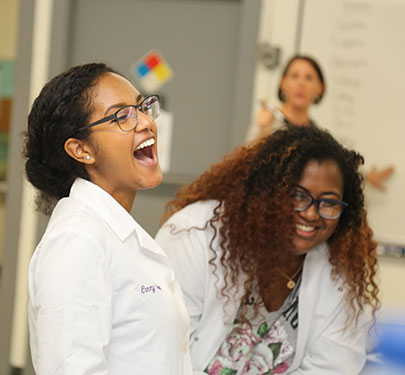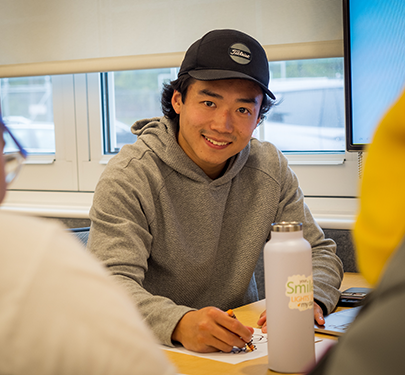
“It’s really true that college is what you make it. The more involved you are and the more you do on campus, the better your experience will be. Take the initiative and say hello. There’s a lot to do and great stuff happening at Curry, so make the most of your time on campus.”
Craig Dudley '12
Major: Graphic Design
Recent News
- Curry College Celebrates Commencement 2013
- Awards Recognition Ceremony Celebrates the Best of Curry 2012-2013
- Curry College Equestrian Places 5th at National Championship Competition
- More News >
Upcoming Events
- New Student Orientation 2013: First-Year Students
June 6 - June 20 - New Student Orientation 2013: Transfer Students
July 18 - August 1 - More Events >
- You are here:
- Curry College - Home /
- Programs & Courses /
- Undergraduate Programs /
- Majors, Minors, and Concentrations /
- Majors /
- Criminal Justice /
- Criminal Justice Curriculum
Criminal Justice Curriculum
The criminal justice major provides the opportunity to systematically examine criminal justice systems and the administration of justice, as well as the causes and patterns of crime and criminal behavior and the ways in which criminal justice institutions have responded in trying to solve these social problems. Criminal justice courses emphasize practical problem solving and theoretical skills, which are useful to careers in criminal justice, legal studies and community and social service.
Core courses in the major are designed to expose students to the range and variation of crime and criminal behavior, the criminal justice systems and the administration of justice that attempt to control and mitigate social problems. Students will review: the major systems of social control, policies and practice; consider the social and personal consequences of crime and criminal behavior on victims; look at the issues of juvenile justice; corrections, including the history and practice of corrections and the range of institutions meant to treat offenders; understand the nature and causes of crime, crime typologies, offenders and victims; examine criminal law and procedure, understanding how the courts work and how legal decisions are made; examine the history, theory and practice of police organizations, including internal views that consider police subculture; issues of ethics in law enforcement and criminal justice; study deviance and social control; and be grounded in methods, both quantitative and qualitative, for conducting and analyzing criminal justice research and theory.
Elective courses in the major are designed to provide a detailed focus on some area of criminal justice and consider the broader theoretical issues of significant social problems, such as violence. Related requirements are courses found outside of the major in other liberal arts disciplines that have strong relevance for criminal justice.
For the criminal justice course offerings, CJ 1000 provides a comprehensive descriptive overview at the introductory level, 2000- level courses provide an in-depth specialized study of a particular case, area, or social phenomenon and introduce theoretical perspectives, and 3000-level courses analyze case materials applying theory critically in specific cases and consider the consequences of various theories on social policy and strategies for social change.
CJ 1000 is required as a prerequisite for any 2000-level criminal justice course and any 2000-level criminal justice course is a prerequisite for any 3000-level criminal justice course. Any student who has grounds to request a waiver of this requirement may do so by contacting the criminal justice area coordinator for a decision. This request must be made prior to enrolling in the upper-level criminal justice course.
Grade Requirements for Criminal Justice Majors
Students who major in Criminal Justice must achieve a grade of C- or above in all core courses in the major. If a student receives a lower grade than a C-, that student will need to repeat the course.
| CJ 1000 | Introduction to Criminal Justice Systems and the Administration of Justice |
3 |
Core Requirements:
| CJ 2000 | Criminology | 3 |
| CJ 2020 | Criminal Law | 3 |
| CJ 2030 | Criminal Procedure | 3 |
| CJ 2100 | Corrections | 3 |
| CJ 2212 | Policing | 3 |
| CJ/SOC 2350 | Human Diversity in Criminal Justice | 3 |
| CJ/SOC 2600 |
Methods in Social Research |
3 |
| CJ 3300 |
Justice and Human Rights Advocacy | 3 |
| CJ 3900 |
Capstone Seminar: Criminal Justice | 3 |
Criminal Justice Electives:
| Six credits at the 2000-or 3000-level | 6 |
Requirements in Related Areas:
| MATH 1150* | Statistics I |
3 |
Six credits chosen from among the following 3 credit courses
(The six credits may also be used to fulfill a concentration):
| AC 2010 | Identity Theft |
| AC 2215 | Network Security Fundamentals |
| AFAM/P&H 2330 | African Americans in the United States |
| BIOL/CHEM 2700 | Introduction to Forensic Science |
| COM 2100 | Managerial Communication |
| COM 2010 | Public Speaking |
| COM 2020 | Intercultural Communication |
| COM 2112 | Conflict Management |
| COM 2130 | Nonverbal Communication |
| COM 2180 | Leadership Communication |
| COM 2230 | Writing for Communication |
| COM 3040 | Persuasion |
| ED 2455 | Programming for Positive Youth Development |
| ED 2600 | Children with Special Needs |
| ENG 2480 | Writing for the Professions |
| MGT 2500 | Human Resource Management |
| MGT 2511 | Public Administration |
| MGT 2610 | Crisis Mgt. and Contingency Planning |
| MGT 3600 | Capstone in Homeland Defense: Developing an Emergency Response Plan |
| P&H 2200 | Political Tactics |
| P&H 2310 | American Constitutional Law |
| P&H 2380 | U.S. Immigration History |
| P&H 2390 | American Constitutional Issues |
| P&H 2400 | Politics of Deception |
| P&H 2500 | State and Local Politics |
| P&H 3590 | Capitalism, Socialism, and Democracy |
| PHIL/REL 2013 | The Ethics of War and Peace |
| PHIL 3000 | Social and Political Philosophy |
| PSY 2100 | Adolescent Psychology |
| PSY/SOC 2115 | Men, Self, and Society |
| PSY 2125 | Substance Abuse Counseling |
| PSY 2200 | Behavior Disorders in Children |
| PSY 2205 | Dysfunctional Families |
| PSY 2310 | Psychology of Criminal Behavior |
| PSY 2320 | Psychology and the Law |
| PSY 2330 | Drugs and Behavior |
| PSY 3130 | Brain and Behavior |
| PSY 3200 | Stress, Coping and Adaptation |
| PSY 3210 | Stereotypes and Prejudice |
| PSY 3260 | Psychology of Violence and Terror |
| REL 2210 | Faith and Fanaticism |
| SOC 2310 | Introduction to Social Work |
| SOC 2410 | Working with Groups |
| SOC 2420 | Working with Individuals |
| SOC 2670 | Minorities and Majorities |
| SOC 3390 | Crisis Intervention |
| SOC 3610 | Communities |
| SOC 3760 | Wealth, Poverty, and Social Class |
| SPAN 1030 | Spanish for Health, Criminal Justice, and Social Services I |
| SPAN 1040 | Spanish for Health, Criminal Justice, and Social Services II |
| WGS 2000 | Women's Lives: Gendered Realities |

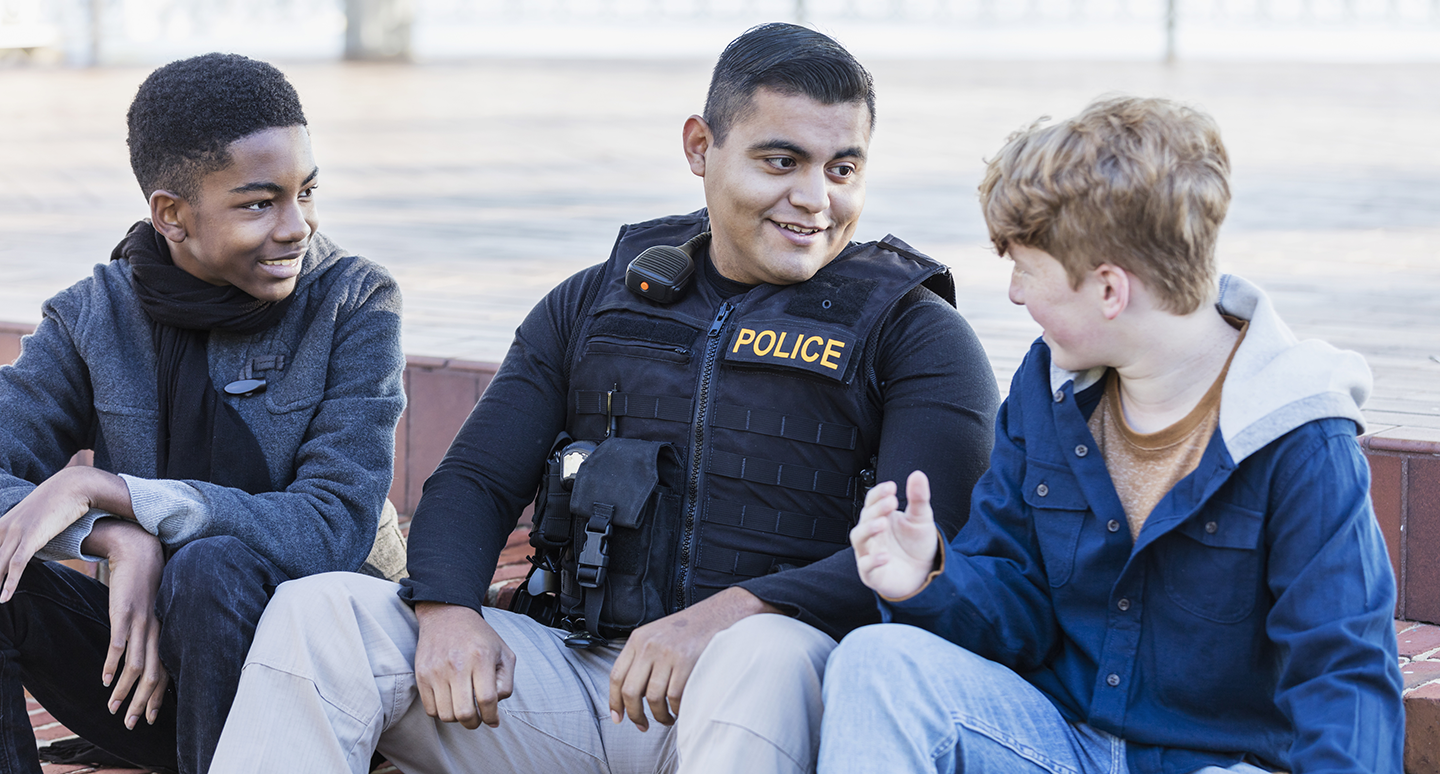
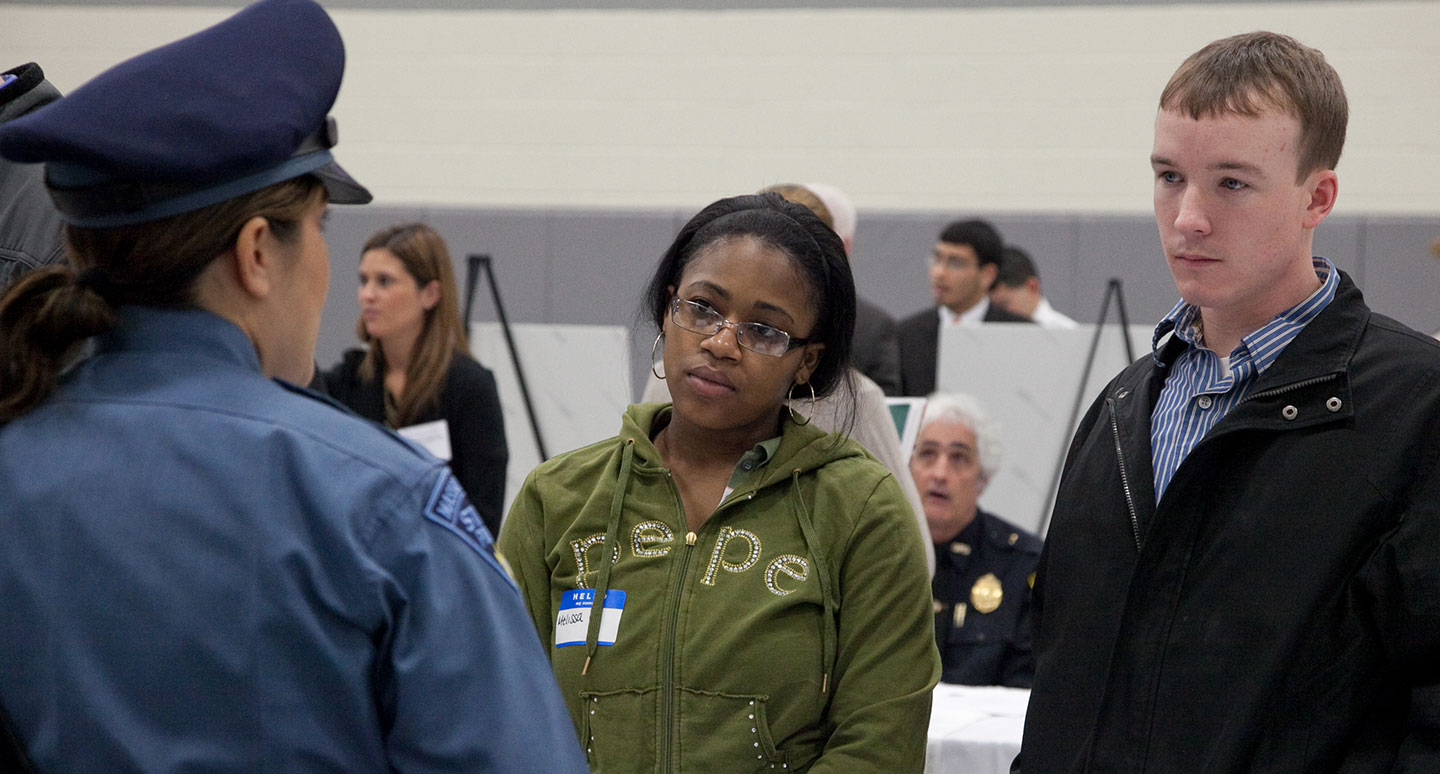
Twenty-three year old police officer Greg Gough '11 certainly took advantage of his time at Curry. He played lacrosse while balancing his internships and Criminal Justice coursework. He also minored in Psychology - an area of study that still helps Gough on the job today.


.png)