
- September, 30, 2026
- Read Time: 5 Min
- Share
Seven years ago, Courtney Lee ’17 joined the team behind NASA’s Nancy Grace Roman Space Telescope. Since then, she has helped tell the story of the mission from the ground up - documenting the telescope as it was built, developing its digital presence, creating campaigns to engage the public, and ultimately helping share its launch with audiences around the world.
On August 30th, she watched the telescope she had spent years documenting finally leave Earth.
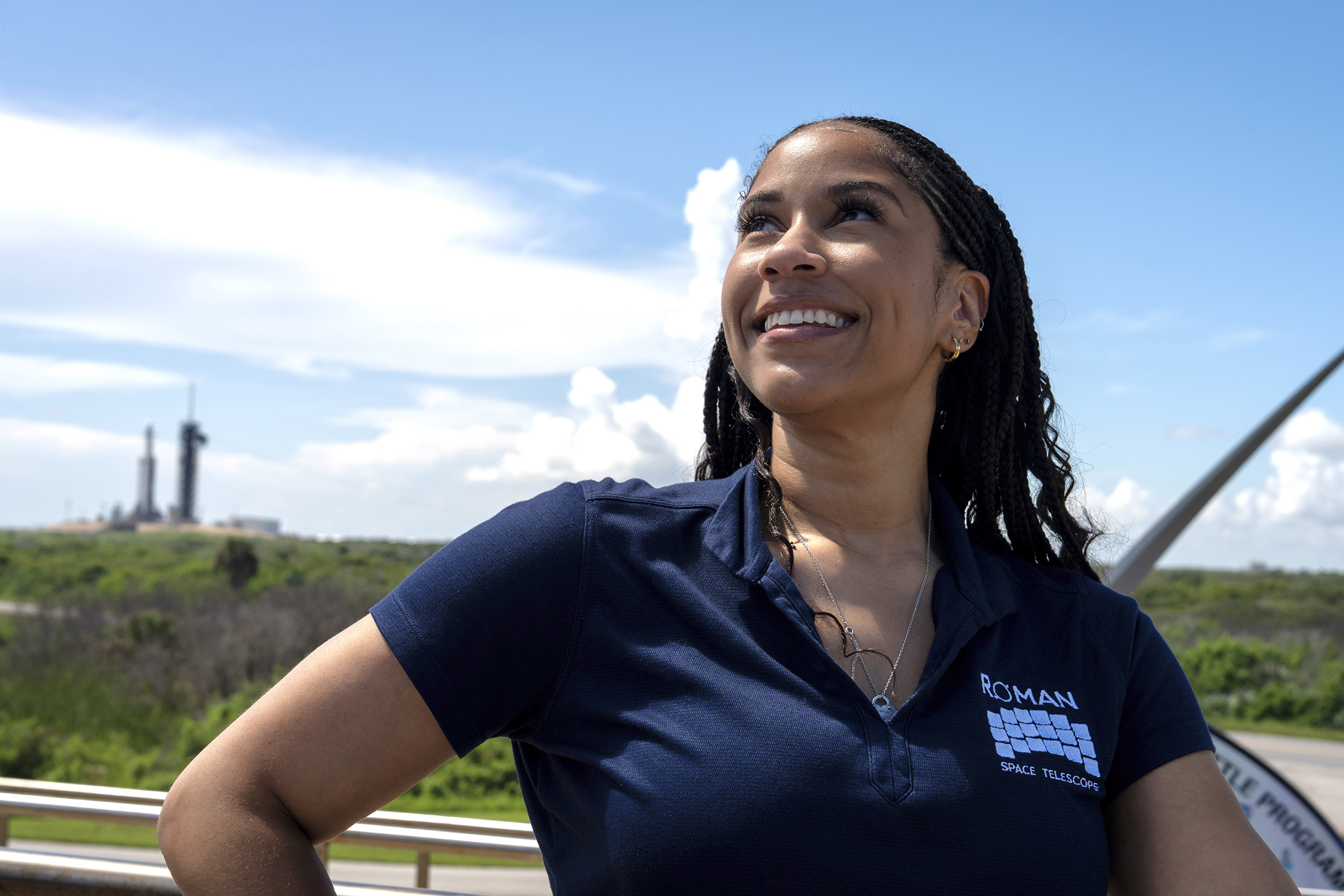
“Watching her (Roman Telescope) float into space a million miles away was so surreal,” Lee said. “It’s like a dad teaching his child how to ride a bike…we spent so much time with her, building her, documenting her start, and now she’s off and on this journey alone.”
Roman is designed to observe the sky at extraordinary scale, capturing images 100 times larger than the Hubble Space Telescope. “It’s going to survey the sky at incredible speeds and help us learn more about our universe,” Lee said. “Some of the main science topics are dark matter, dark energy and looking for exoplanets. We know what galaxies are supposed to look like, but sometimes when we look into the sky, they appear distorted because there’s dark matter in the way.”
As digital lead for the Roman mission at NASA’s Goddard Space Flight Center in Greenbelt, Maryland, Lee is responsible for helping make an incredibly complex scientific mission more easily digestible for her audiences-which, for her, means the entire world.
With no formal science background herself, she has spent eight years working alongside scientists and engineers at NASA, asking questions and learning how to turn technical concepts into digestible content for social media.
“I want our content to be accessible to as many people as possible,” Lee said. “We try to make some of these words that are more jargon into everyday language.” For example, rather than leading with a term like “exozodical dust," Lee can explain it more simply for her audience to understand: “It’s basically just space dust.”
Her work spans social media, video, web content, public outreach and digital campaigns. She also works closely with teams across NASA to amplify Roman through the agency’s larger digital channels.
Her work has also included public engagement campaigns tied to the mission, including the “Send Your Name” project, which invited people to submit their names to be stored on an SD card attached to Roman and travel into space with the telescope. The campaign collected 1.3 million names in just three weeks.
As the telescope was being built, Lee developed relationships with the engineers and technicians working on it and looked for ways to give audiences a closer view of the process. Eventually, Lee became certified to enter the clean room herself, allowing her to capture point-of-view footage and document work on the telescope up close.
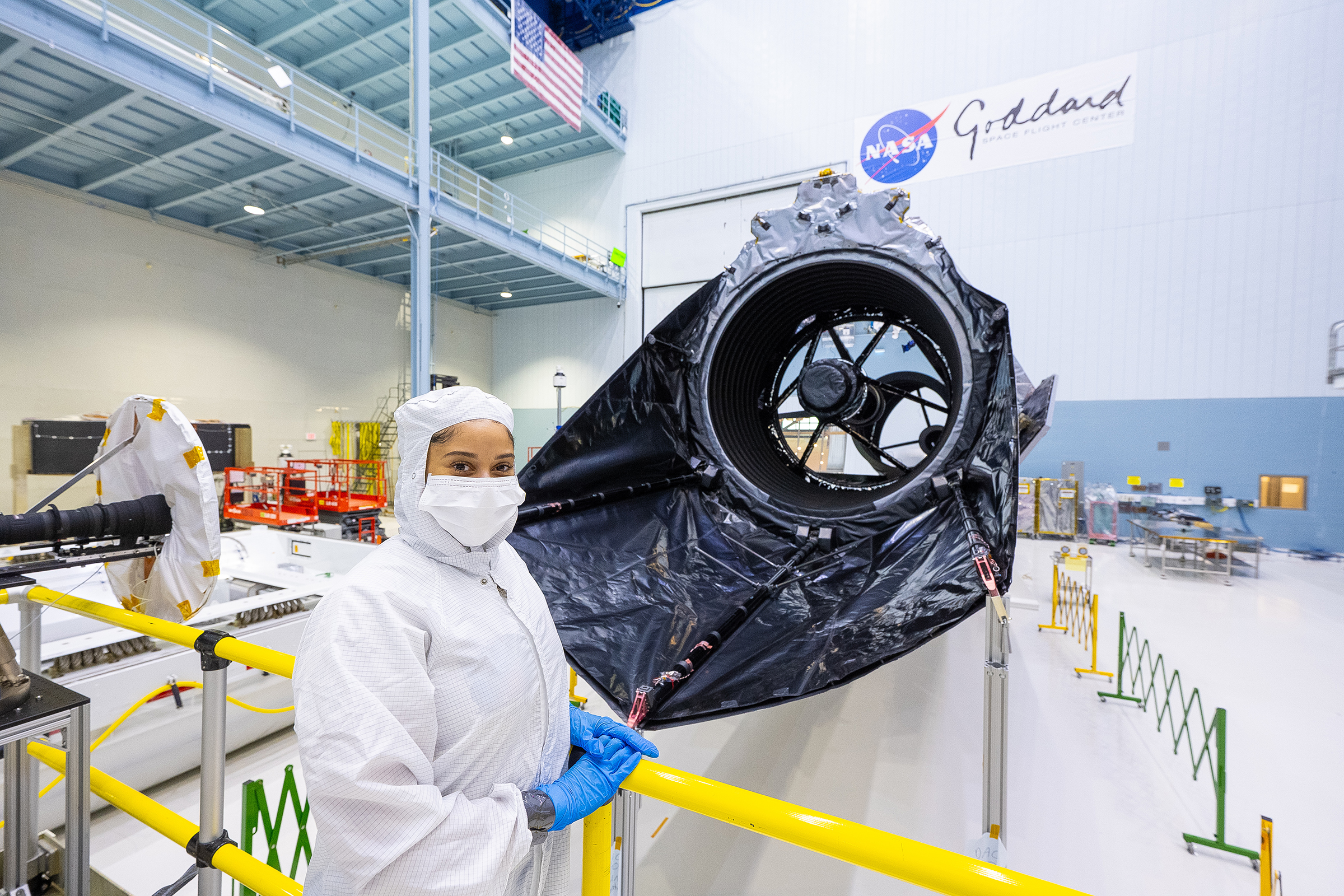
“On other missions, the social media role has traditionally been about receiving the content and posting it,” Lee said. “But it was important for me to get to know the people behind the mission.” Rather than focusing only on the telescope and its science, she wanted audiences to meet the people who spent years making the mission possible.
As Roman prepared to leave Earth, Lee's communications team expanded with support from across NASA. She arrived around 4:00 a.m., with livestreams and social platforms open as the team answered questions, shared clips from the broadcast and pushed content across NASA channels.
At the same time, Lee found herself documenting the reactions of colleagues who had spent years—some even decades—working toward moments like this.
“It's more than the telescope,” Lee said. “Just knowing all the hard work that was put into it and seeing that being fulfilled and seeing it on their faces—that’s something I’m most proud of.”
With Roman’s first images expected in early 2027, Lee is already exploring how to showcase photos that will contain enormous amounts of data and detail. Her ideas range from working with museums and other partners, to imagining Roman’s imagery displayed across some of the largest screens in the world, like Times Square.
She is also continuing to pursue partnerships that can introduce the mission—and Dr. Nancy Grace Roman, the pioneering astronomer for whom the telescope is named—to audiences who may never have sought out a NASA mission on their own. One idea she is particularly excited about is a pitch to Mattel for a Barbie honoring Dr. Grace Roman.
A career translating the science behind a NASA space telescope was certainly not on Lee’s radar when she graduated from Curry in 2017 with a degree in Communication. That all changed when she came across an internship opportunity in NASA’s newsroom, and although she was no longer technically eligible as a student, Lee tracked down the person who posted the position and reached out directly, because in her words, “why not?”. As a result of her perseverance, Lee joined NASA’s Goddard Space Flight Center in 2018 as an intern, and transitioned to a full-time role on the communications team the following year. What began as social media support eventually grew into her current role as the mission’s digital lead, all because she decided to take a chance.
- Read Time: 5 Min
- Share