
- June, 23, 2026
- Read Time: 5 Min
- Share
When Patrick Leary '27 first arrived at Curry, he was a student-athlete studying Business. But as he began thinking more seriously about his future, he realized the career path he was interested in wasn’t one Curry offered…yet.

As a lifelong athlete, Patrick had always been drawn to sports and performance. And after experiencing injuries of his own while playing on the Curry football team, and going through the rehabilitation process, his perspective shifted. During his sophomore year, Patrick tore his hip labrum and dealt with significant lower back pain, eventually turning to physical therapy to help him return to the sport he loved.
“My physical therapist really listened to me,” Patrick said. “I was trying to get back to playing college football, which is a completely different thing than someone who is just trying to walk up stairs again. Finding someone who understood my situation was really important.”
Seeing the impact that care and communication had on his own recovery inspired Patrick to explore a career helping other athletes reach their goals. Unfortunately, it wasn’t a major that Curry offered at the time.
“I sadly began the transfer process…not because I didn’t love Curry, but because my career aspirations changed from when I started the college search process,” he said.
Then, during a team workout in the weight room, everything changed. Head football coach Todd Parsons burst in with news that would keep Patrick at Curry: The College was launching a new Exercise Science program.
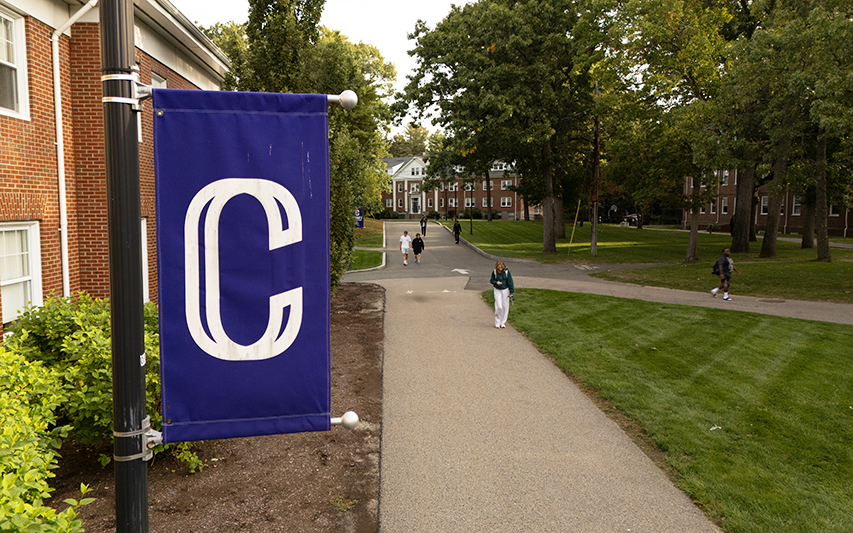
The Curry Difference
Curry College's Exercise Science curriculum was developed to allow students to explore and develop skills for a multitude of career options, creating well-rounded graduates and career flexibility. Whether pursuing careers in personal training, cardiac rehab, or athletic training, students will rarely work in isolation. As such, the Exercise Science program uniquely emphasizes taking an interdisciplinary approach to movement science.
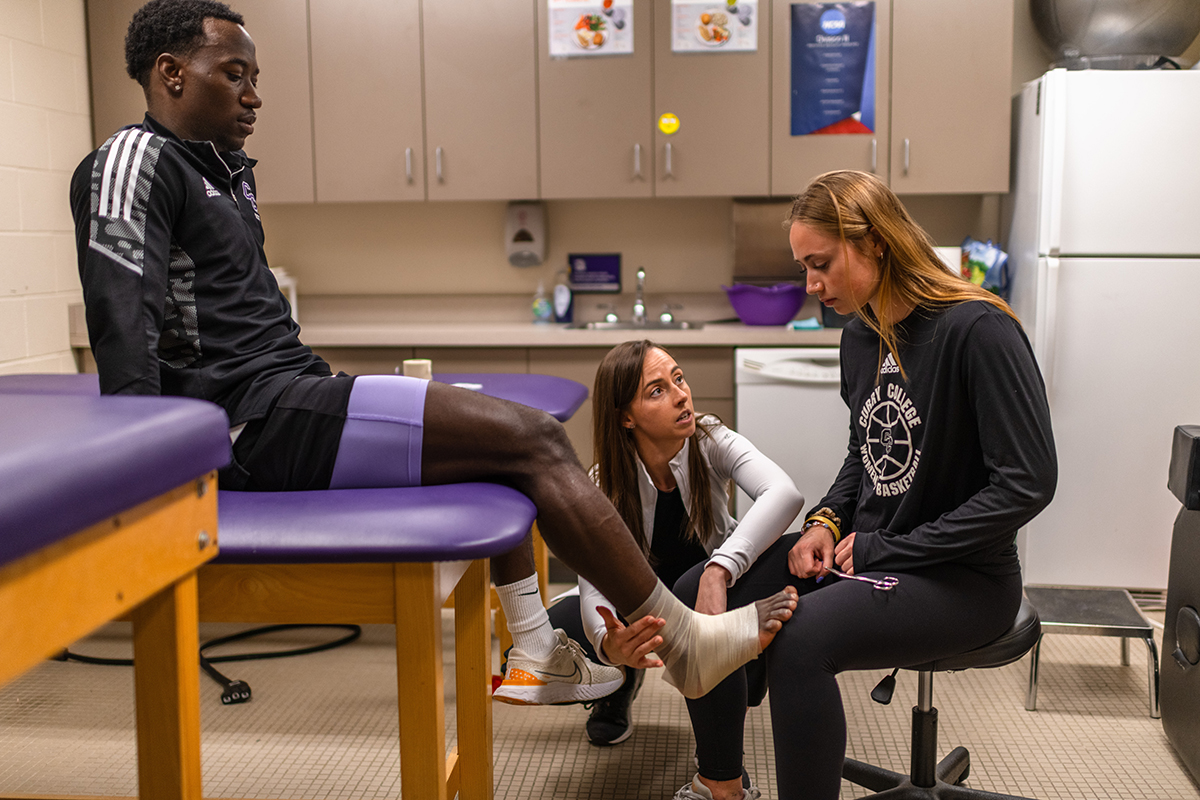
The Exercise Science program emphasizes hands-on learning for practical application. Students will go beyond traditional classroom learning to practice skills both in the classroom AND through two required clinical internships.
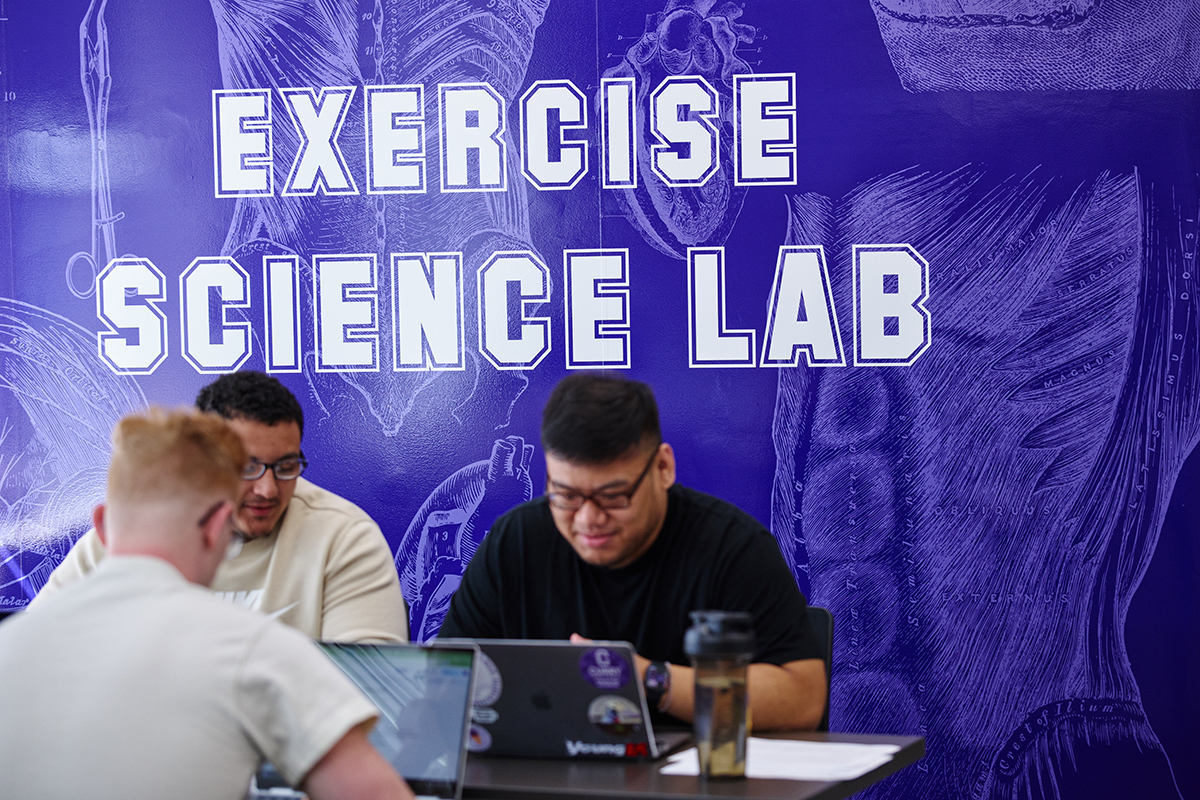
The Curry College Exercise Science program is accredited by the Commission on Accreditation of Allied Health Education Programs upon the recommendation of the Committee on Accreditation for the Exercise Sciences.
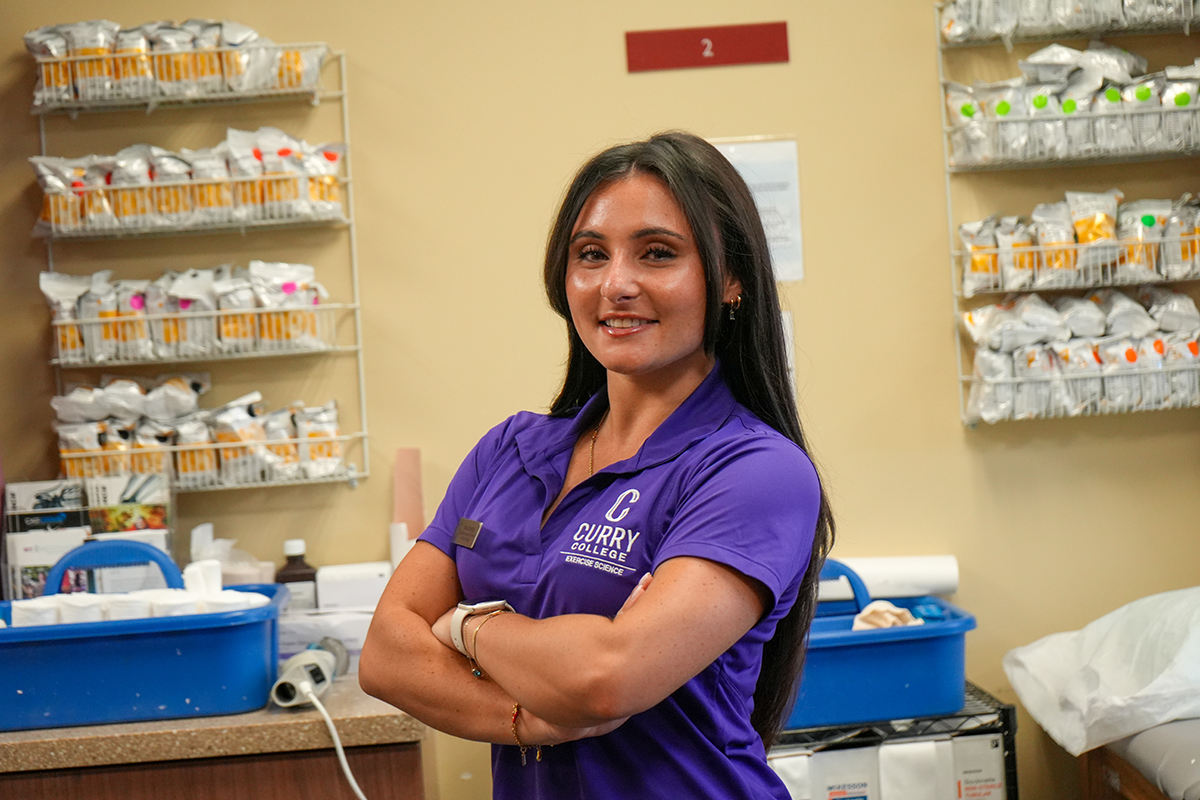
In Massachusetts alone, job growth for the Exercise Science field is projected to be nearly 30% by the year 2032.
The timing was impeccable. The new major gave him the opportunity to combine his passion for athletics with his interest in human performance without leaving the Curry community he had grown to love. “I couldn’t believe it,” he said.
As part of the Exercise Science curriculum, Patrick recently completed a clinical placement as a Strength and Conditioning Intern at Bando Athletic Performance. The experience put him directly into the field, where he worked with athletes ranging from youth competitors to members of the Northeast Generals junior hockey team.
At Bando, Patrick helped guide athletes through workouts, demonstrated exercises, assisted with programming, and worked alongside Director of Sports Performance Joe Hoch to develop training plans. He quickly learned that strength and conditioning is about much more than lifting weights; it requires communication, trust, and the ability to understand each athlete’s goals.
“You have to prove yourself at the end of the day,” he said. “You have to show them why they should trust you.”
One of the biggest lessons Patrick learned was the importance of treating every athlete as an individual. Drawing from his own rehabilitation experience, he understands the physical demands of recovery and the importance of helping athletes stay focused on their long-term goals, some of which include careers in their sport.
“The athletes coming in here aren’t just doing a normal workout,” he said. “Some of these players are trying to make careers out of what they’re doing. We have to take it seriously.”
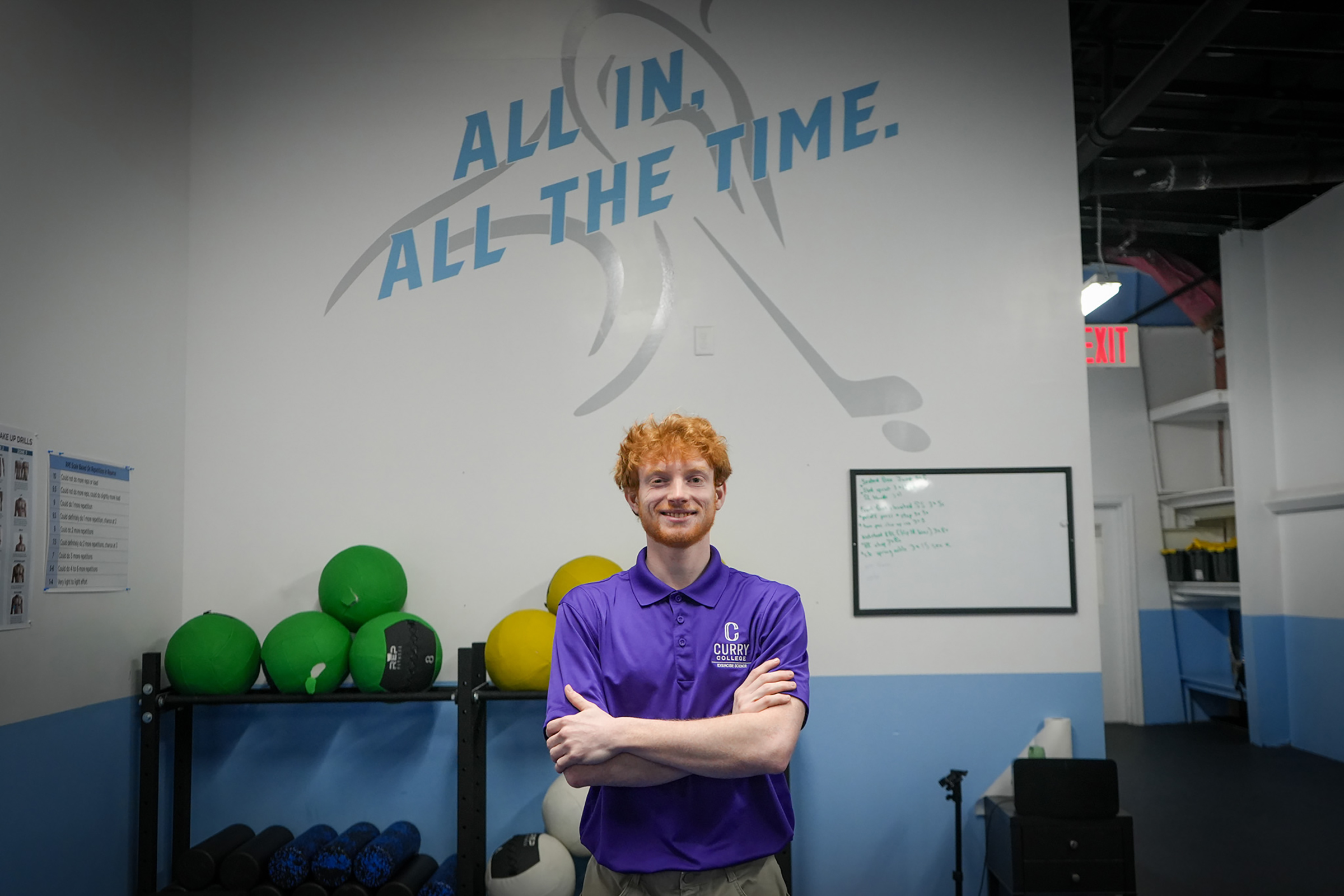
Patrick credits Curry’s Exercise Science faculty and the hands-on opportunities for preparing him for this experience. Classes involving exercise testing and performance measurements while using state-of-the art equipment in the Exercise Science Lab helped him apply what he learned in the classroom to real-world situations.
“We used a lot of force plates and sprint testing at Bando,” he said. “Being able to take those results and put them into a qualitative perspective to help program for athletes is really beneficial.” Looking back, he believes this clinical experience gave him something more than what he could have learned in a classroom alone.
“Because of this clinical experience, I truly would have never found my passion for training high-level athletes in team environments,” he said. “There’s still a long way to go, but I’m proud of the effort I’ve put in and the knowledge I’ve gained.”
- Read Time: 5 Min
- Share