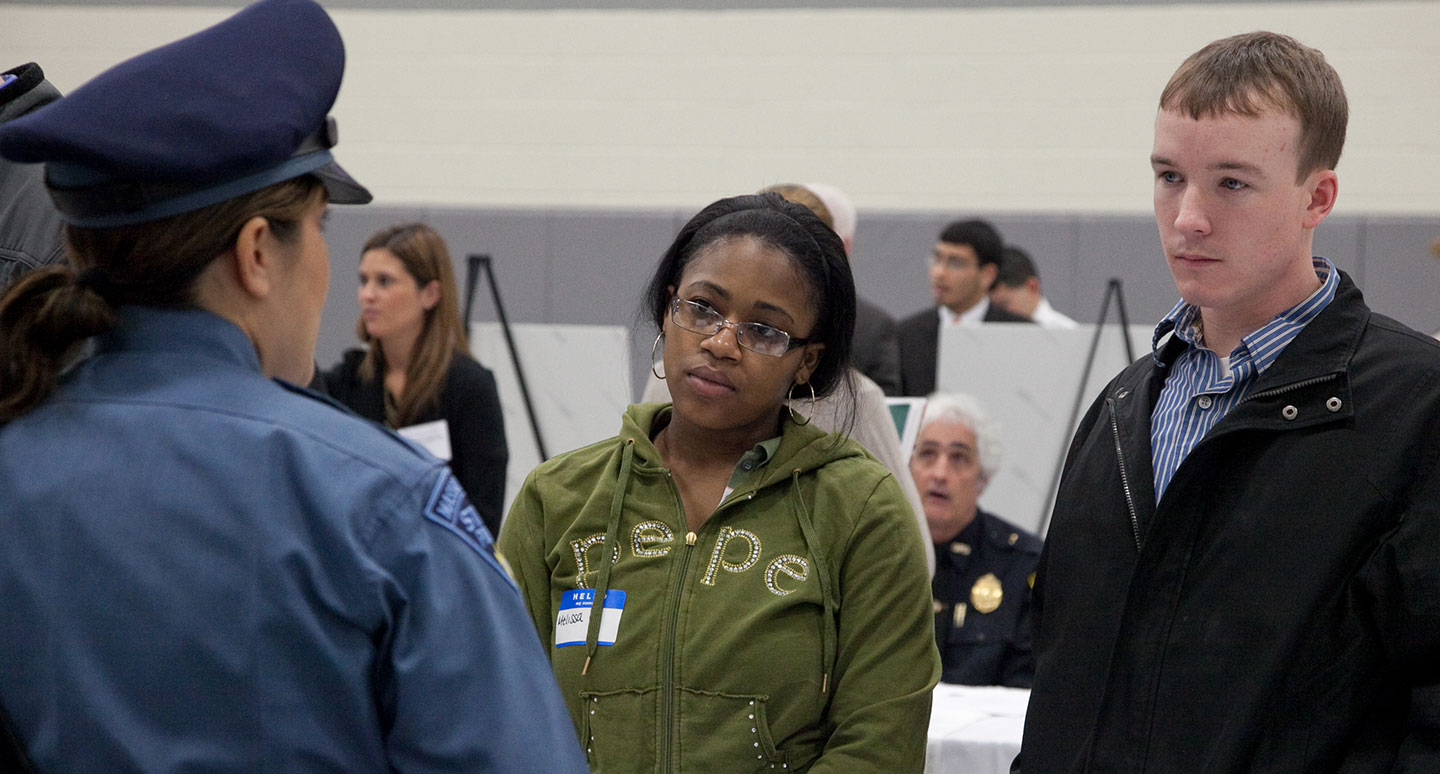
Where Advocacy and Justice Meet
The Community Advocacy and Justice (CAJ) major is designed for students committed to facilitating positive social change with the intention of promoting human rights in a variety of different communities. This major analyzes social structures and systems to better understand how to engage grassroots activism, utilizing proven strategies to address, reduce, and prevent violence. By drawing from the disciplines of Sociology, Criminal Justice, and Social Work, the Curry College CAJ curriculum prepares students for a variety of careers in human services, organizing, non-profit, and human rights agencies.
Follow Us @CurrySocCJ!
The Community Advocacy and Justice major at Curry allows students to understand how harm and violence create obligations and needs within communities, and that in order to break longstanding patterns of violence, the response must both hold those who create the harm accountable while facilitating healing for individuals and communities. While recognizing that reform of current criminal justice practices and systems is important and much needed for harm reduction, this major focuses on the critical role of community responses to harm, violence and/or abuse. This is based on the core belief that there are limits to how much healing the official justice system can provide, and there may be more possibility for transformation in our communities through grassroots forces than through the government.
Community Advocacy and Justice Curriculum
The Community Advocacy and Justice major at Curry draws from the fields of Criminal Justice, Sociology, and Social Work. Each of these disciplines contributes to understanding the context where the work of social and transformative justice must happen.
Students will:
- Examine the current criminal justice system and its impacts on individuals, families, and communities.
- Be asked to critique these systems and explore alternatives to our criminal justice system where the emphasis is on healing, empowerment and social change for survivors, families, and communities.
- Evaluate the social institutions and systems that cause or contribute to injustice and how to work with communities to make changes to those systems.
- Take a two-course sequence, earning them a certificate in Restorative Justice that helps to prepare them for work in this realm.
Community Advocacy and Justice Major Requirements and Learning Outcomes
Courses You'll Love
Restorative Justice: Community and Incarceration
Resiliency Rising: Restorative Justice
Grassroots Activism
Serving Diverse Populations
Social Movements
Justice and Human Rights Advocacy
You may also like...
Online 5th Year Master's Degree Option
We offer a fully online 5th year Master of Arts in Criminal Justice program where students can earn a bachelor’s and a master’s degree in five years. This program allows our students the opportunity to work academically side by side with experienced professionals in the field, as well as with our faculty experts. Our fully online high-touch model allows students the best opportunity to flexibly finish their master’s degree with the same high-quality faculty mentorship they are used to in just one additional year after completing their B.A.
The Path to Your Dream Career
Just a few of the many career options include:
- Advocacy
- Community Organizer
- Human Rights
- Human Services
- Intervention
- Non-profit
- Organizing
- Outreach Worker
- Restorative Justice Facilitator
- Violence Interrupter