
Schedule an appointment to meet with Career & Experiential Learning about your area of interest.
Make an Appointment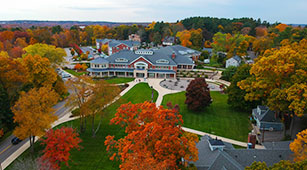
Student Life
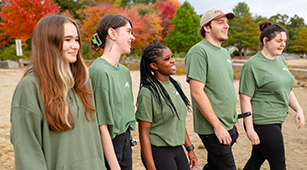
Student-run clubs, organizations, and events are a key part of succeeding at Curry.
Get Involved!Athletics
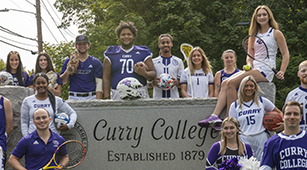
A Division III experience unlike any other. See what it means to be a Curry Colonel.
Video: Curry AthleticsAlumni

Empower our students to achieve their ambitions. Consider a gift to Curry College today.
About Us
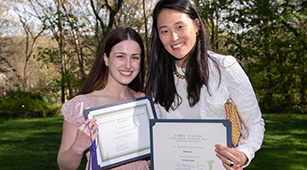
Our rich liberal arts tradition, sound career focus, and empowering and supportive environment prepare our students for success.
Academic ExcellenceContact Career & Experiential Learning
- 617-333-2195
- careerdevelopment@curry.edu
- 65A Atherton Street
What Is Experiential Learning?

Experiential learning is when you learn by doing, through internships, projects, jobs, research, and other work where you get to apply what you have learned in the classroom to a hands-on setting. It takes learning beyond the traditional classroom, giving you the chance to try something, reflect on what you learned, connect it to your career direction, and use that to inform your next steps. Education researcher David Kolb described this as a cycle: experience, reflection, thinking, and action.
CXL recognizes that building job-ready skills alongside classroom learning helps prepare you for life after graduation, no matter what path you choose. It also gives you more real-world experience to draw from, so you can make more informed decisions about where you want your career to go.
At Curry, there are multiple pathways for getting involved in experiential learning and we encourage you to take part in a variety of experiences throughout your time here. Each one helps you build skills, learn more about yourself, and get a clearer sense of where you want to go next.
Ways to Gain Experience
Earn course credit while gaining hands-on experience in a field you're interested in. Internships are coordinated with a faculty internship supervisor, who helps you find an opportunity and determine your learning goals for the semester.
A guided, non-credit option for students who want extra support finding and completing a summer internship. You'll attend workshops on search strategies and preparation, check in with CXL throughout the summer, and reflect on your experience afterward.
Interested? Contact Career & Experiential Learning at careerdevelopment@curry.edu to learn more.
Short-term, paid projects with real companies, typically completed remotely in 10 to 40 hours. Micro-internships through Parker Dewey are a low-commitment way to get real work experience and build your resume, without the time commitment of a full internship.
Not all experiential learning has to come from a job or internship. Job simulations, like the free ones available through Forage, let you practice real workplace tasks and learn more about a company or industry in just a few hours. Independent projects, whether it's a capstone with a hands-on component or something you build on your own (a coding project, a design portfolio, a research effort), can also count as experiential learning and are worth including on a resume.
If you're a nursing or education major, experiential learning is already built into your program. Clinicals and practicums give you hands-on, supervised experience applying what you've learned in the classroom, an essential part of your training and required for your degree. Visit the School of Nursing and Health Sciences or Education Degrees pages to learn more about how these experiences fit into your program.
Looking for additional experience? Many nursing and education students also gain valuable experience through related part-time work, such as working as a CNA or at a childcare center.
Working on campus is a great way to build professional skills, earn money, and make connections, all while contributing to the Curry community. On-campus jobs range from general roles across departments to positions like Resident Assistant, peer mentor/tutor, fitness center staff, or event crew, and are managed through the Student Employment Program (SEP), which includes both federal work-study and non-work-study positions.
Science majors at Curry can work closely with faculty on real research projects, gaining hands-on lab and research experience while building a mentoring relationship with a professor in their field. Many students go on to present their work at the College's Academic Forum or at professional conferences.
Getting involved in a club or student organization is a great way to meet people on campus with similar interests, and stepping into a leadership role, like an officer or event coordinator, gives you hands-on experience in communication, organization, and problem-solving. Students looking for a more formal leadership opportunity can also get involved with the Student Government Association (SGA), representing the student body and helping shape decisions that affect campus life.
Curry offers several ways to give back to the community while building leadership and real-world skills. Through Federal Work-Study, students can take on paid community service positions with local organizations in Milton and the surrounding area, in fields like healthcare, education, and social services. Students can also get involved in Alternative Break Service Trips, traveling during Winter or Spring Break to volunteer with organizations like Habitat for Humanity or Give Kids the World.
Many Curry students work part-time or full-time while in school, whether in retail, food service, healthcare, or another field, and that experience counts too. Jobs like these build transferable skills, such as, communication, reliability, time management, and problem-solving, all of which matter to employers no matter where your career takes you.
As you think about your future goals, it's also worth exploring experiences more closely connected to your field of interest, whether that's an internship, campus involvement, or a related part-time role. CXL is a great resource for helping you make the most of the experience you already have, and for exploring ways to build experience that connects to where you want to go next.
Studying abroad is a valuable cultural experience, and depending on the program, it can also be a way to gain experiential learning. Some study abroad placements include internships, service learning, or other hands-on opportunities as part of the experience.
Visit the Study Abroad page or meet with the Study Abroad office to learn more about experiential learning opportunities abroad.
With so many ways to gain experience at Curry, it's okay not to know exactly which path is right for you. Meet with Career & Experiential Learning to talk through your interests and goals, and figure out which opportunities make the most sense for where you are right now.