Skip Navigation Back to Top

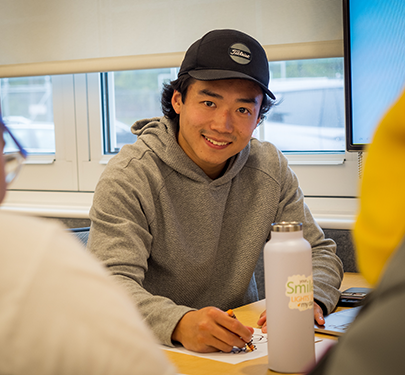
A Graphic Design student works on a tablet in the ThinkTANK design studio at Curry College

AI-Fluent Design Practices + Ethical AI for Creatives

The creative economy is evolving faster than ever. AI is no longer a tool of the future; it is embedded in every major creative workflow and reshaping expectations across design, marketing, media, and visual communication. Graphic designers who can think conceptually, work fluently with intelligent technologies, and make data-informed decisions will lead the next generation of creative industries; those who cannot, will be left behind.

The Graphic Design program at Curry College prepares students to meet this moment. Rooted in the traditions of design excellence, the curriculum integrates artificial intelligence as an ethical, essential creative resource alongside human-centered research and data-driven insight across studios in branding, UX/UI, motion, editorial, packaging, photography, animation, and in-house client work through Studio 1071 and internships, students practice hybrid workflows that combine analog craft, digital production, analytics, and AI-supported prototyping, and testing.

Students pursue a well-rounded course of study that develops conceptual thinking, visual systems, technical proficiency, and professional readiness. They learn to interpret user, audience, and market data; to design with accessibility, diversity, and equity in mind; and to reflect critically on the social and ethical implications of intelligent tools. By linking artistic inquiry with innovation, the program equips graduates to navigate and shape, the dynamic intersection of design, technology, and intelligent systems.

Real-World Experience. Future-Ready Design.

Take your skills to the next level with industry-style studio practice, integrating professional tools, research, analytics, and ethical AI workflows.

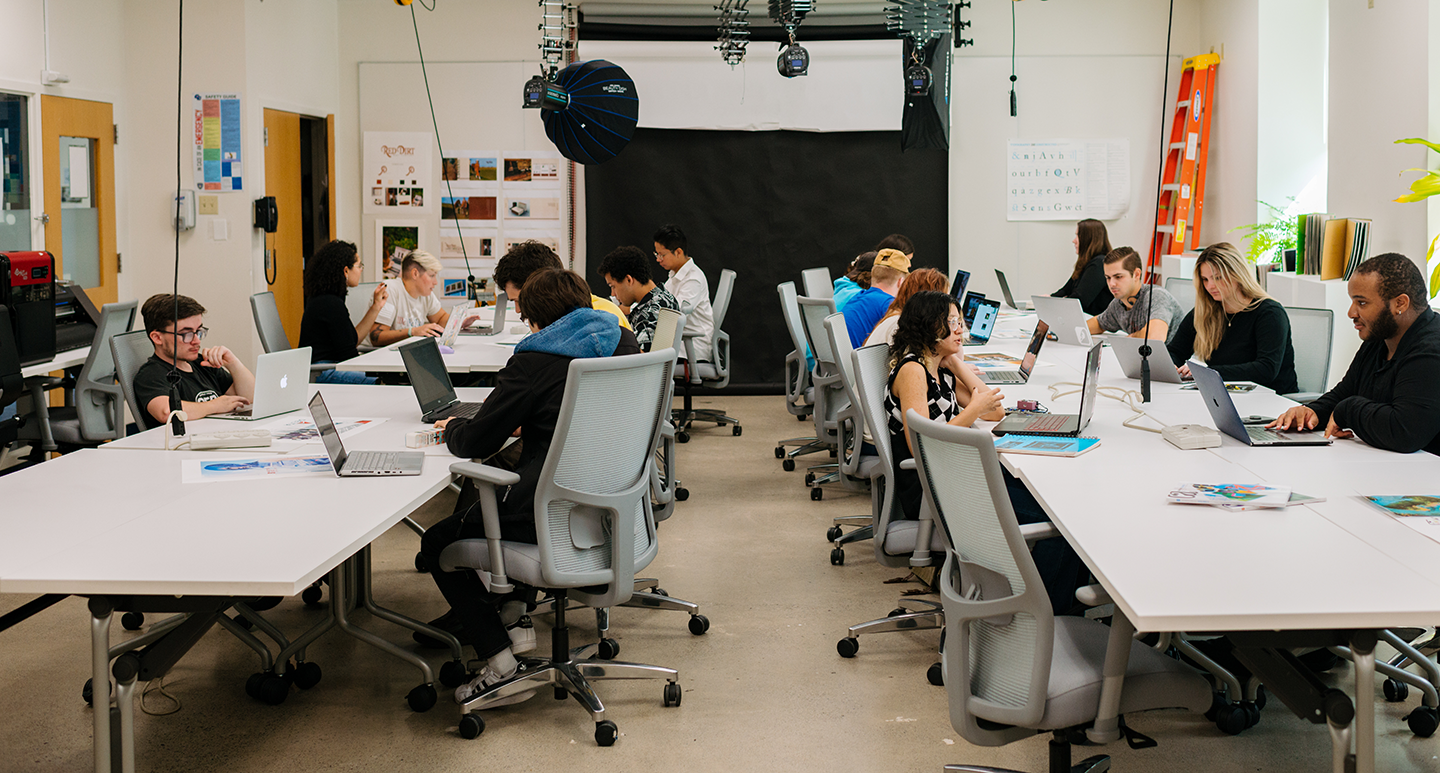
  • Create in a professional studio setting. Collaborate and iterate in our ThinkTANK style design studio, an open, modern workspace built for critique, teamwork, and production.
  • Master industry-standard tools and workflows. Develop fluency in Adobe Creative Suite and contemporary design workflows across branding, UX/UI, motion, editorial, and packaging, integrating AI-supported prototyping responsibly.
  • Use cutting-edge technology and equipment. Produce high-quality work using advanced print and digital tools, including large-format printing, digital photography equipment, and our Wacom tablet workflows.
  • Design with insight, research + analytics. Learn to interpret user, audience, and market data to strengthen creative decisions, test concepts, and refine outcomes.
  • Engage the design community. Participate in professional networking opportunities and student design events, including AIGA engagement, connecting with practicing designers and alumni.
  • Build a career-ready portfolio and case studies. Receive ongoing feedback from faculty and industry professionals and graduate with a cohesive portfolio, supported by case studies that demonstrate concept, craft, strategy, and ethical design practice.
  • Show your work publicly. Exhibit projects through on-campus showcases and curated opportunities that help students build confidence and professional presence.

Graduates of the program will be able to:

  • Demonstrate mastery of design principles and digital craftsmanship across print, interactive, motion, and emerging media.
  • Apply AI-augmented, data-informed, and hybrid design workflows responsibly and transparently to produce consistent, high quality creative outcomes.
  • Integrate human-centered and ethical considerations including accessibility, diversity, and social impact into research, strategy, and visual decisions.
  • Present a cohesive professional portfolio, supported by case studies, that reflects conceptual depth, technical excellence, and readiness for contemporary creative careers.

Key Program Highlights:

  • AI is already the industry standard in creative work, this program teaches our students to use it fluently and responsibly, not fearfully.
  • Design fundamentals still matter (concept, craft, visual systems) AI is integrated alongside strong design training, not replacing it.
  • Students learn hybrid workflows: analog + digital + AI + analytics.
  • The program is human-centered and ethical: accessibility, DEI, transparency, and social impact are built into our curriculum.
  • Career readiness is embedded: Studio 1071 client work, internships, professional presentations, and portfolio case studies.
  • The outcome: a cohesive portfolio that shows conceptual depth, technical skill, & “ready-to-hire” professionalism.

Graduates leave career-ready, equipped to shape the future of visual communication through creativity, integrity, ethical AI practice, and strategic, impactful design in an exciting and evolving global design field.

You may also like...

Course Requirements and Information

Where Can a Graphic Design Degree Can Take You?

Graphic Designer / Visual Designer
Corporate Communications Designer
Brand Strategist / Identity Designer
Social / Content Designer
Front-End Web Designer
Motion Graphics Designer
Marketing Designer / Campaign Designer
UI / UX Designer 
Interaction Designer
Digital Storyteller
2D & 3D Animator
AI + Data-informed Creative Roles
AI-Augmented Designer / Creative Technologist
Generative Design Specialist
Prompt + Visual Ideation Specialist
Creative Optimization Associate
Marketing Analytics–Adjacent Creative Roles

Key essential competencies for professional graphic designers include:

Conceptual and Problem-Solving Skills

  • Identify and define communication challenges and design problems across various contexts.
  • Conduct research and interpret relevant data to inform the design process and develop creative, data-driven, evidence-based solutions.
  • Apply critical and innovative thinking to generate original and effective visual concepts. 

Visual and Aesthetic Competence

  • Apply principles of visual organization, composition, and color theory to produce cohesive and compelling designs.
  • Employ typography effectively to enhance communication, readability, and visual impact.
  • Create visual outcomes that demonstrate aesthetic awareness and purposeful design decisions.

Contextual and Human-Centered Understanding

  • Design with sensitivity to audience, purpose, and cultural context.
  • Integrate knowledge of human factors, including accessibility, usability, diversity, and user/market data, into design solutions.
  • Demonstrate ethical awareness in evaluating the social, environmental, and technological impact of design practice, including the responsible use of artificial intelligence.

Technical and Professional Proficiency

  • Demonstrate proficiency in industry-standard tools, software, and production technologies, including AI-driven design applications.
  • Apply AI, analytics, and emerging technologies thoughtfully, understanding both their creative potential and their ethical limitations.
  • Manage projects effectively, collaborating with others and meeting professional standards of communication, organization, and accountability.
  • Present a cohesive professional portfolio that reflects individual strengths, creativity, and readiness for employment or advanced study.

Historical and Theoretical Insight

  • Analyze and interpret works of art and design within historical, cultural, and theoretical frameworks.
  • Critically evaluate visual communication from diverse perspectives and traditions, including the evolving role of technology and AI in visual culture.

Ethical and Responsible Integration of Artificial Intelligence

  • Evaluate and apply AI technologies in ways that enhance creativity while upholding ethical standards of authorship, equity, and accountability.
  • Critically assess the influence of AI on design processes, cultural narratives, and professional practice.
  • Demonstrate transparency and integrity in the use of AI-generated or AI-assisted content.

Independent Professional Competence

  • Produce original, conceptually sound, and technically proficient work with minimal supervision.
  • Demonstrate adaptability, professionalism, and commitment to ongoing learning within the evolving design field.
  • Exhibit responsible leadership in navigating ethical and technological change in the creative industries.

Portfolio – Strongly Encouraged

First-year students applying as Graphic Design majors are strongly encouraged to submit a portfolio of 10 original works of art/design.

Transfer students applying to Graphic Design are encouraged to submit a portfolio of 15 original works to help us place you into the most appropriate courses.

While a portfolio is not required for admission, it is highly recommended to strengthen your application and to ensure the best possible course placement. 

What to Include

We welcome a wide range of creative work, including but not limited to:

  • Drawing and painting (from observation and imagination)
  • Digital illustration, comics, or concept art
  • Graphic design (posters, logos, layouts, branding, typography)
  • Photography, collage, or mixed-media
  • 3D work such as sculpture, models, or product/packaging prototypes
  • Still or animated digital pieces (motion graphics, short animation, video)

You may also include work that uses AI or other digital tools as part of your process. If you do, please briefly note what you created by hand and how you used AI or software so we can better understand your creative decision-making. If it is not disclosed what was done, we will not accept the piece.

Portfolio Submission

Portfolios can be submitted to curryportfolio.slideroom.com.

Acceptable file types include:

  • Images: JPG, GIF, PNG (up to 5 MB each)
  • Video: FAV, WMV, MOV, MP4 (up to 60 MB each)
  • Audio: MP3 (up to 30 MB each)
  • Documents: PDF (up to 10 MB each)

If you have questions about file formats or uploading, please contact adm@curry.edu.

Need Help Getting Started?

If you do not currently have a portfolio or are unsure what to include, please reach out to:

Alison Poor-Donahue, MFA
Professor and Chair, Department of Visual & Performing Arts to schedule a portfolio consultation or to discuss how to begin building your work.

Laptop Requirement for Students Majoring in Graphic Design

The College requires all students in the Graphic Design Program to have a laptop computer and a subscription to Adobe Creative Suite when they declare their major in Graphic Design. Classroom instruction, course assignments and research during and outside of class hours will require the use of a personal computer.

We require a minimum of 32GB RAM to ensure ease when running Adobe Creative Suite. Up-to-date operating systems and software are required. If a laptop is purchased that doesn’t meet the recommended laptop specifications it may not be able to run industry software or last the length of the undergraduate program.

The Visual and Performing Arts Department also highly recommends that all students purchase an external hard drive for additional portable storage and file back-up (1TB is optimal). Several models are available through the College Bookstore or from Apple Education. The department also recommends that students obtain AppleCare+ and a USB-C to USB Adaptor.

Required Laptop - Minimum Specifications: 14-inch MacBook Pro with M5 chip

Hardware:

  • 10-core CPU, 10-core GPU, 16-core Neural Engine
  • 32GB unified memory
  • 512GB SSD storage
  • Standard display
  • 70W USB-C Power Adapter
  • U.S. English Backlit Magic Keyboard with Touch ID
  • Three Thunderbolt 4 ports, MagSafe 3 port, 3.5 mm headphone jack, HDMI port, SDXC card slot
  • Support for up to two external displays
  • Accessory Kit

Software:

  • Photos, iMovie, GarageBand
  • Pages, Numbers, Keynote
  • macOS

Students must also obtain the Adobe Creative Suite through a monthly subscription online. Subscriptions for students are offered at a reduced fee and proof of enrollment at Curry College is required when subscribing.

Questions? Please contact: Alison Poor-Donahue, MFA
Professor and Chairperson
Department of Visual & Performing Arts
978-407-3121 (cell)
alison.poordonahue@curry.edu

Financial Aid

The purchase of the recommended model of the required laptop and the annual student subscription to Adobe Creative Suite will be included in the cost of attendance that is used to determine financial aid and loan eligibility one time during a student’s undergraduate experience at Curry College.

Technical Support

Please note that Curry College’s Information Technology Services (ITS) Department does not provide full support to student laptops. Curry ITS provides best-effort support including software installs/troubleshooting, virus removal, and general use questions. Students are strongly encouraged to obtain AppleCare+ to access additional support including service, accidental damage coverage, and battery service coverage directly from Apple.

Laptop Requirement for Students who are Minoring in Graphic Design:

All students minoring in Graphic Design are required to have a laptop that meets minimum specifications. While Apple is the industry standard in the Graphic Design field, not all industries utilize this platform. Regardless of whether or not a student utilizes an Apple or PC, those who minor in Graphic Design should consult with the Visual and Performing Arts Department to ensure that their device meets the minimum standards required to utilize Adobe Creative Suite. All students minoring in Graphic Design are required to subscribe to the Adobe Creative Suite and laptop computers must be powerful enough to support the Adobe Creative Suite.


Professor Alison Poor-Donahue, MFA, Graphic Design

Meet Professor Alison Poor-Donahue

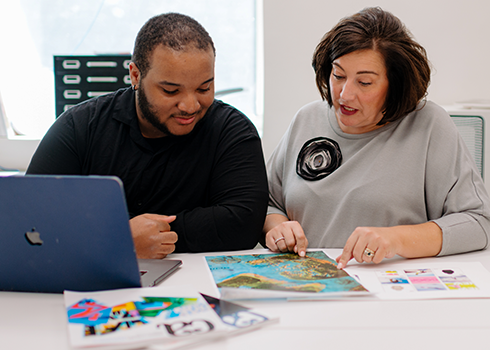
As a highly motivated professor with years of expertise in the field, Alison Poor-Donahue, MFA leads the recently redeveloped Graphic Design major at Curry College. She encourages and supports student innovation, experimentation, and encourages an entrepreneurial attitude both inside and outside the classroom.

The Curry College ThinkTANK Design Studio

Welcome to the ThinkTANK

To replicate the industry atmosphere, Curry College has created a “ThinkTANK” design studio in the Kennedy Academic Building. In this space, students brainstorm, conceptualize, and develop dynamic systems that facilitate meaningful, consumer-based interactions. Students now have access to a digital photography studio, large format printers, and industry-standard Wacom tablets.

Explore the ThinkTank

Explore Related Programs:

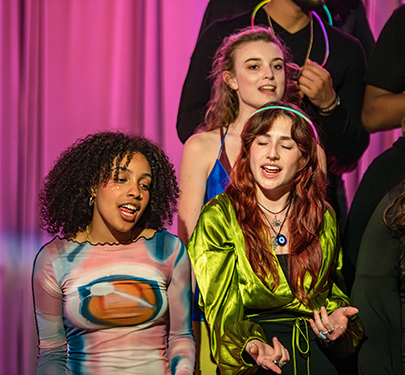
Curry College Sing! student performers belt out a tune on stage

Sing!

Curry College Sing! prepares music selected from a cappella and accompanied choral repertoire from a variety of styles and genres for performance events on and off campus.

Curry College theatre students perform in the Keith Auditorium on campus

Theatre

Participation in Curry Theatre stage shows and our Improv Team brings students from a wide variety of academic programs, including those interested in the Visual and Performing Arts.

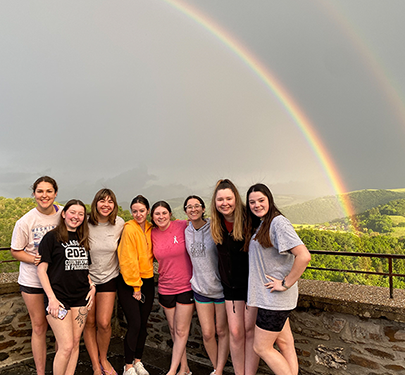
A Curry College Study Abroad student pets an elephant in Thailand

Study Abroad

Go global with Curry College faculty members as part of our very popular Short-term, Faculty-led Courses, or create your own customized Study Abroad opportunity!

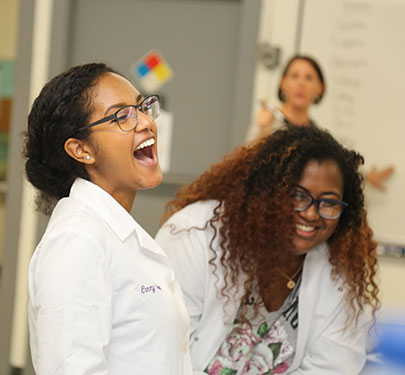
Curry College students laughing in science lab

First-Year Experience

Making the transition to college can be a little confusing and lot of fun. Your First-Year Experience at Curry College helps smooth out the bumps and puts you on the path to success.

A Curry College faculty member interacts with students in the classroom

Gen Ed

At the heart of Curry College's undergraduate curriculum is our General Education (Gen Ed) Program. Gen Ed is based on our belief in the power and potential of the liberal arts.

Discover How Curry Is Made For You

No two Curry journeys are alike. Apply today and discover what’s in store.